You know the strain of watching a production schedule slip while your team waits for one more preparation step. A small delay feels much bigger when orders are due, and the next shift is arriving. At S.P. Chemicals, we supply Liquid potassium hydroxide for industrial use with these daily pressures in mind. We understand why you want a chemical supply that fits your process without adding more work to an already demanding day.
When your plant runs around the clock, ease of handling matters. So does knowing how much active material enters your process. We see the value of liquid potassium hydroxide in this practical balance: less preparation, controlled feeding, and a clearer routine for your team.
Picture a shift that starts with raw materials ready but a mixing tank still occupied. Before production moves forward, dry chemicals need weighing, dissolving, and checking. Each task takes time, equipment, and attention. We know that even a well-planned schedule needs room for these steps.
A supplied solution removes the need to dissolve solid potassium hydroxide on site. We still need to account for any further dilution, but one preparation stage is already complete. That makes liquid supply worth considering when your process uses an aqueous feed. Dissolving dry KOH also releases considerable heat, so removing that stage reduces a handling task at your premises.
At S.P. Chemicals, we encourage you to look beyond the chemical purchase price. Preparation time, tank use, labour, and process delays all belong in the same discussion. A lower price per tonne means little if your actual cost per unit of finished product rises.
During a long production run, you need more than a working pump. You need a known solution strength and a feed rate matched to your process. We recommend checking both before changing from solid material to liquid supply.
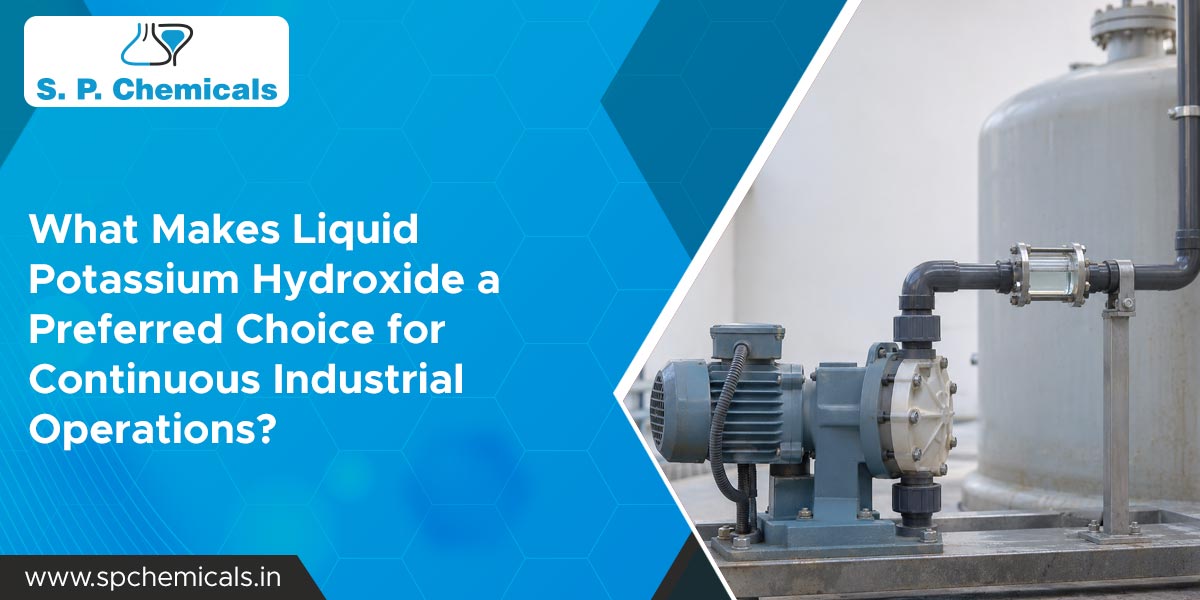
With Liquid potassium hydroxide for industrial use, we can discuss supply around your required strength and consumption rate. A suitable metering system then allows controlled addition without repeated manual charging. The benefit comes from the full setup, including mixing, instruments, and routine checks.
We also suggest keeping shift records simple enough to use during busy hours. A clear record of feed settings, tank levels, and test results helps you spot changes early. Nobody wants the next shift to spend an hour working out why a setting changed.
When a soap batch needs repeated correction, the disruption reaches beyond the mixing vessel. Filling schedules change, quality checks take longer, and your team starts watching the clock. We focus on raw material consistency because it gives you a firmer starting point.
At S.P. Chemicals, we supply Potassium Hydroxide for soap manufacturing in Qatar for buyers seeking material suited to approved recipes. KOH is used in soft and liquid soap manufacture. We encourage you to match the supplied strength to your recipe before setting the dose.
For our supply of Potassium Hydroxide for soap manufacturing in Qatar, we discuss the required specification before order placement. A liquid feed must be included in your water balance. We want your team to account for both the active alkali and the water entering the vessel.
A cleaning product that varies between batches creates avoidable questions. Was the dose different? Did the raw material strength change? We favour clear checks that help you narrow down the cause before adjusting a whole formula.
We supply KOH for cleaning agent formulations in Saudi Arabia, where potassium hydroxide serves as an alkaline ingredient. Its role depends on the blend and intended cleaning task. We recommend checking the finished formula for cleaning performance and surface compatibility, rather than judging results by alkalinity alone.
At S.P. Chemicals, our discussions about KOH for cleaning agent formulations in Saudi Arabia begin with your product specification. We ask you to consider solution strength, dosing needs, and the rest of your formula together. Increasing the alkali level without testing can create fresh problems instead of solving an existing one.
In a food plant, a missing document can hold up an otherwise planned delivery. We understand why purchasing and quality teams need clear answers before material reaches the unloading area.
For Potassium Hydroxide in food processing in Kuwait, we begin supply discussions with the intended use and grade requirements. KOH has food processing uses, including pH control, but industrial grade material is not a substitute for suitable food grade supply. We ask you to confirm the requirements that apply to your product and market.
At S.P. Chemicals, we treat enquiries for Potassium Hydroxide in food processing in Kuwait as application-led discussions. Before finalising an order, we encourage agreement on the specification, supporting records, and batch acceptance checks. That early work helps keep purchasing decisions aligned with your quality process.
We cannot recommend a water-based solution simply because liquid dosing is convenient. Biodiesel production needs closer attention to moisture, feedstock quality, and the chosen reaction route.
When supplying Potassium Hydroxide in biodiesel production in the UAE, we ask you to confirm the required chemical form. In common alkali-catalysed routes, excess water and free fatty acids promote soap formation. We therefore avoid presenting aqueous KOH as a direct replacement for a suitable dry catalyst.
Our discussions about Potassium Hydroxide in biodiesel production in the UAE focus on your process limits before handling benefits. We want the grade, moisture level, and method of addition agreed first. A convenient delivery format only helps when your chemistry supports its use.
Choosing liquid supply does not remove the need for careful storage and handling. We recommend reviewing your tanks, pipework, seals, and unloading arrangements before the first delivery. KOH is corrosive, and equipment suitability depends on service conditions.
At S.P. Chemicals, we suggest covering these points during your planning:
We also recommend checking the product safety data sheet before handling or changing your setup. Liquid supply removes solid dissolution work, but leaks, splashes, and dilution heat still need proper controls.
What you want is straightforward: fewer avoidable delays and a process your team can manage with clarity. We believe the right choice starts with your actual production needs, including water limits, storage space, and dosing equipment.
At S.P. Chemicals, we welcome a discussion about your required grade, strength, and monthly demand. Share where preparation or feeding slows your line, and we can review the supply requirement with you. The aim is practical: a chemical choice that supports steady work, sound checks, and fewer last-minute adjustments.

