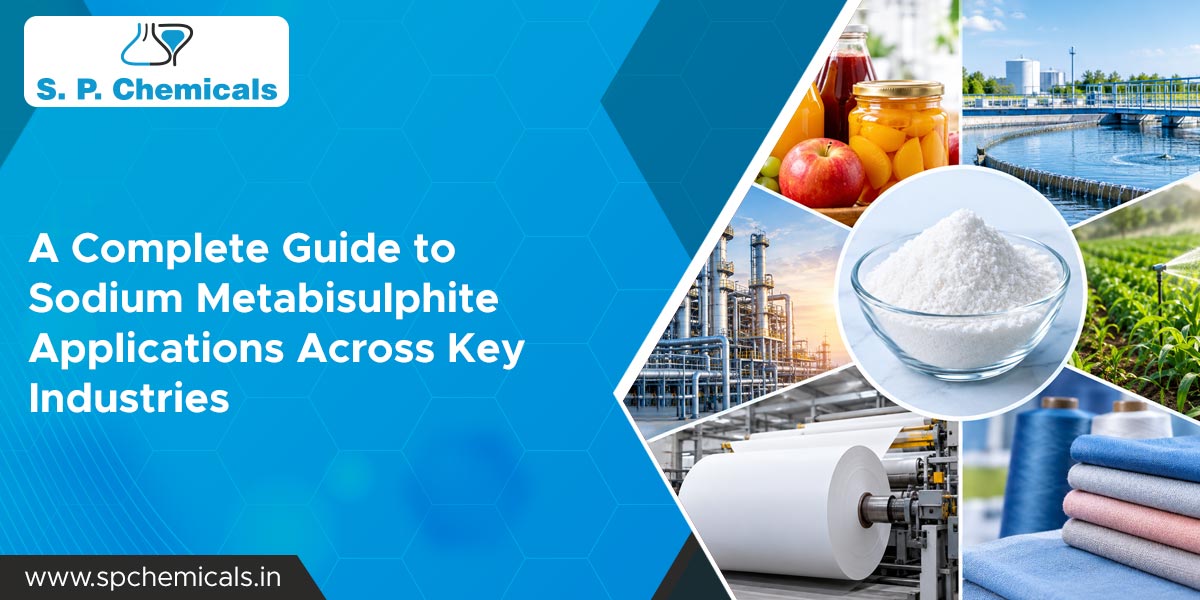
A small change in colour, smell, purity, or process time can affect an entire production batch. We’ve seen how one chemical choice can protect quality, reduce waste, and prevent costly delays. As trusted Sodium Metabisulphite exporters in India, S.P. Chemicals helps businesses choose a suitable grade for each application.
Sodium metabisulphite is a white crystalline powder with a strong sulphur smell. It works mainly as a preservative, antioxidant, bleaching agent, and reducing agent. When mixed with water, it releases sulphur dioxide, which supports many useful chemical reactions.
At first, this may sound like a chemical used for one narrow task. In practice, it plays an important role across food, water, paper, textile, mining, and photographic work. S.P. Chemicals supplies this product for varied needs while keeping quality and safe handling in clear focus.
The right grade matters because every process has different purity needs. Food processing requires suitable food-grade material, while industrial work may use a technical grade. Choosing only by price can lead to poor results, added waste, or a damaged final product.
A chemical order is not only about bags, quantity, and price. Buyers also worry about purity, batch records, packing strength, shipping dates, and steady supply. As Sodium Metabisulphite exporters in India, we understand that one delayed shipment can affect a complete production plan.
S.P. Chemicals supports buyers with clear product details and suitable packing choices. We discuss the intended use before suggesting a grade. This simple conversation helps reduce confusion and ensures that the supplied material fits the actual process.
For overseas buyers, moisture protection is especially important. Poor packing can cause lumps, loss of strength, or handling trouble after arrival. As experienced Sodium Metabisulphite exporters in India, we focus on sound packing, careful storage, and clear export papers.
Have you ever noticed how one treatment stage can affect every stage that follows? Residual chlorine may damage membranes, affect sensitive equipment, or disturb later chemical reactions. Sodium Metabisulphite for water treatment in Oman helps neutralise chlorine when used under controlled conditions.
S.P. Chemicals understands that water quality, chlorine level, and system flow can vary from one site to another. The correct dose should be based on actual process readings. Using too little may leave chlorine behind, while using too much can raise chemical use and affect water balance.
In desalination and reverse osmosis plants, Sodium Metabisulphite for water treatment in Oman may help protect membranes from oxidising agents. This use can support smoother plant work, but routine testing remains essential. A treatment programme should never rely on guesswork.
Many industrial sites also use Sodium Metabisulphite for water treatment in Oman before water enters sensitive production steps. Our team can discuss purity, packing, storage, and supply needs. Final dosing should always follow plant data and expert guidance.
Food changes quietly. A sliced fruit may darken, a drink may lose freshness, or a product may spoil sooner than expected. Sodium Metabisulphite in food preservation in Qatar can help control oxidation and unwanted microbial growth in approved food uses.
The chemical may support colour, freshness, and shelf life in selected fruit, vegetable, beverage, and processed food products. S.P. Chemicals supplies suitable grades based on stated needs. We also encourage buyers to check local food rules before setting any dose.
Using Sodium Metabisulphite in food preservation in Qatar requires care because sulphites can affect sensitive consumers. Correct labelling, controlled dosing, and proper records help protect both the product and the end user. More chemicals do not mean better preservation.
A food maker may choose Sodium Metabisulphite in food preservation in Qatar for a clear process need, not as a general fix. Trials, recipe checks, and quality tests should guide each decision. This approach helps maintain taste, colour, safety, and customer trust.
Paper production involves more than turning pulp into sheets. Brightness, shade, strength, and chemical balance can change during several stages. Sodium Metabisulphite for pulp and paper industry in the UAE may help remove leftover chlorine after bleaching.
This process is often called antichlor treatment. It helps stop residual chlorine from affecting pulp quality or later production steps. When the dose is controlled well, the chemical can support better process stability and reduce unwanted reactions.
S.P. Chemicals supplies Sodium Metabisulphite for pulp and paper industry in the UAE for suitable mill applications. Before supply, we encourage a clear review of the process stage, required grade, expected use, and storage conditions.
Some paper plants may also use Sodium Metabisulphite for pulp and paper industry in the UAE as a reducing or bleaching support chemical. Each mill has different raw materials and operating conditions. Small plant trials can help confirm the right treatment level.
A fabric can look perfect in one batch and uneven in the next. Leftover chlorine, excess dye, or poor bath control may affect shade and finish. Sodium Metabisulphite in textile industry in Kuwait can support chlorine removal and selected bleaching or dyeing steps.
In textile work, the chemical may help neutralise oxidising agents after bleaching. This can protect fibres before the next stage begins. Correct dosing also helps reduce the risk of uneven shades, weak fabric, or unwanted chemical residue.
S.P. Chemicals supplies Sodium Metabisulphite in textile industry in Kuwait for suitable processing needs. We take time to understand the fabric type, treatment stage, quantity, packing needs, and regular order plan before suggesting a supply option.
When using Sodium Metabisulphite in textile industry in Kuwait, process teams should watch bath temperature, pH, dose, and contact time. These details can change the final result. A controlled trial is often safer than changing a full production batch.
Sodium metabisulphite can lose quality when exposed to moisture for long periods. Bags should remain sealed until use and must be stored above floor level. A clean, dry, and well-aired storage area helps preserve product condition.
Workers should avoid direct contact with the powder. Dust may irritate the eyes, skin, nose, or throat. Contact with acids can release sulphur dioxide gas, so mixing must only happen within a planned and controlled process.
Spills should be handled with suitable protective equipment and proper site procedures. Avoid washing large amounts into drains without checking local rules. Every business should train staff before receiving, moving, opening, or dosing the product.
Many people tell us that product quality is only one part of a good supply experience. Clear answers, honest lead times, suitable packing, and correct documents matter just as much. S.P. Chemicals works to make each step clear, from the first enquiry to dispatch.
Before placing an order, share the intended application, required grade, monthly quantity, destination, and packing choice. This information helps us understand your need without making assumptions. A sample or trial batch may also help before a large order.
S.P. Chemicals serves buyers looking for food preservative chemicals, photographic chemicals, and industrial chemicals. Our goal is simple: supply the right product in the right condition, supported by clear communication and responsible service.
Sodium metabisulphite supports many industries, but its value depends on how carefully it is selected and used. Purity, dosage, storage, safety, and local rules all shape the final result. The same grade may not suit every process.
At S.P. Chemicals, we believe a good supply begins with listening. Tell us what you produce, where the chemical enters your process, and what problem needs attention. We can then guide the product discussion with greater care and clarity.
The right material can protect quality, reduce avoidable waste, and support steady production. When every detail matters, S.P. Chemicals remains ready to help buyers choose and source sodium metabisulphite with confidence.

